Focus on Customized High Speed Brush Machine since 1988.
Language
Focus on Customized High Speed Brush Machine since 1988.
Choosing the right brush making machine is all about aligning technology with your business goals. Whether you manufacture in bulk or serve niche markets, your machinery should match not only your product range but also your production pace, available space, and workforce capabilities.
Too often, businesses rush into buying machines based on price or features, only to discover operational bottlenecks, excess downtime, or wasted materials. A misaligned machine can slow growth instead of driving it.
We will discuss the practical, business-level questions every buyer should consider before purchasing. From output needs to skill requirements and facility readiness, each point helps ensure the machine you invest in fits your operations.
Defining Your Core Product Focus
Before choosing a brush making machine, you need a clear understanding of your core product focus. Are you producing high-volume commodity brushes like brooms, toilet brushes, or dish scrubbers that prioritize speed and cost-efficiency? Or are you targeting specialty markets such as industrial rollers, cosmetic applicators, or medical brushes, where precision and quality control are critical?
The complexity of your product directly affects the features your machine must offer. Specialty brushes often require advanced axis control, precise tufting angles, variable filament lengths, or integrated trimming and flagging. In contrast, standard household brushes may be produced with simpler, high-speed machines designed for repetitive tasks.
Estimating Your Daily and Monthly Output Needs
Before selecting a brush making machine, estimate how many units you need to produce daily and monthly. For example, if your monthly target is 30,000 units, that breaks down to about 1,000 brushes per day (based on a 30-day cycle). From there, assess the required tufting speed; machines with 4–6 holes per second can complete one brush in 20–40 seconds.
Factor in your shift schedule and available workforce. A single 8-hour shift with minimal breaks offers roughly 450 productive minutes per day. Multiply this by the number of brushes per hour your chosen machine can produce to check if your daily target is feasible, or if you’ll need two shifts, or multiple machines. Don’t overlook routine maintenance time, especially with abrasive filaments or dense tufting formats.
If your demand is still growing, an entry-level semi-automatic machine may suffice. But for consistent, high-volume output like 60,000+ units/month, investing in a multi-head automated system with cycle memory and trimming modules will ensure scalability and lower long-term unit costs.
Budget Planning Beyond the Purchase Price
When planning your budget, don’t stop at the purchase price; consider the total cost of ownership (TCO). This includes ongoing expenses like electricity consumption, tooling wear, replacement filaments, and potential downtime. For example, machines running abrasive filaments like silicon carbide may require more frequent maintenance.
Compare your options wisely: a new CNC brush machine may offer longer life, better energy efficiency, and warranty coverage, while a refurbished unit might save upfront costs but lack software support or upgrade paths. Leased machines work well for short-term contracts or pilot lines but may cost more over time due to service contracts and usage restrictions.
Finally, budget for future adaptability. If your product line might expand, consider machines with modular design, where you can later add features like a second tufting head, automated trimming, or flagging units. Investing slightly more now in upgrade-ready systems can prevent costly replacements later.
Facility Readiness and Space Constraints
Before installing a brush making machine, evaluate your floor layout and machine footprint. A typical 5-axis CNC machine can require 2–4 square meters of dedicated space, plus clearance for operator access and filament loading. Tight or inefficient layouts can slow workflow and increase handling time, especially for large brush formats or multi-station setups.
Beyond space, your facility must meet technical requirements. Check power supply compatibility (e.g., 220V single-phase or 400V three-phase) and prepare for dust collection systems, especially when drilling wooden blocks or trimming synthetic filaments. Proper filament storage is essential for maintaining filament integrity and tufting accuracy.
Don’t overlook installation readiness. You may need to reinforce flooring, install air compressors, or route ventilation lines. Planning these infrastructure upgrades avoids costly delays and ensures smooth machine commissioning once delivered.
After-Sale Ecosystem Fit
After-sales support can define the long-term value of your brush machine. Confirm whether the manufacturer offers local technicians, remote diagnostics, or both. Machines with industrial IoT modules or HMI-based alerts allow remote support teams to diagnose faults in real-time.
Pay attention to spare part availability and warranty coverage. Fast access to tufting heads, servo motors, or PLC modules reduces production risk. Some manufacturers offer support packages that include scheduled maintenance and operator retraining.
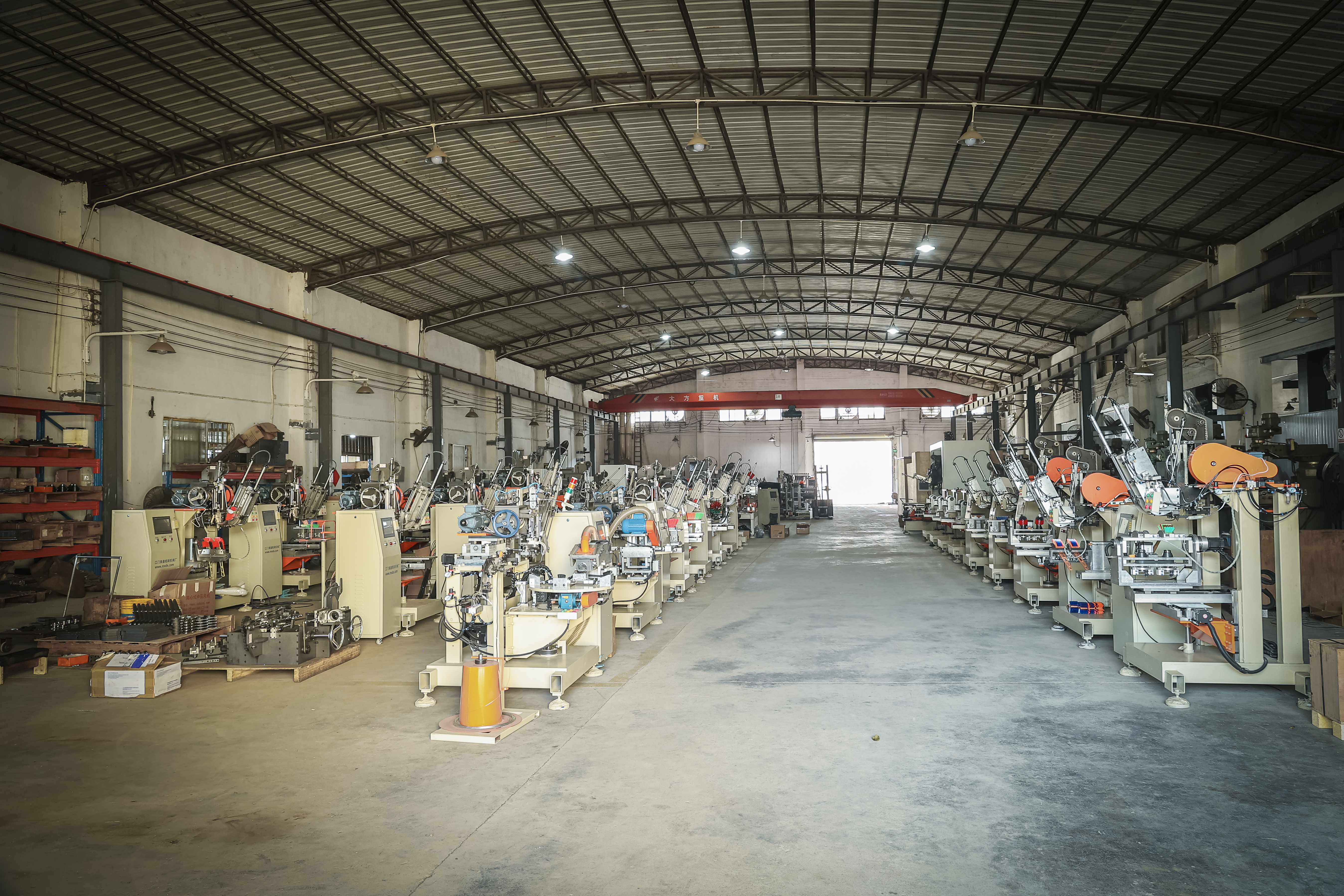
Long-Term Scalability and ROI Planning
When investing in a brush making machine, it’s crucial to think 3–5 years ahead. Can the machine support new brush types, added filament variations, or expanded production volume without full replacement? Machines with modular components and open PLC/CNC architecture are better equipped to grow with your business.
Check for features like axis expandability, multi-head upgrades, or interchangeable tooling systems that allow the machine to handle flat, curved, or dome-shaped brushes as product lines evolve. Software upgradability is also key, machines that accept new firmware or user interface updates will stay compatible with future brush designs or operational needs.
Finally, calculate the expected return on investment (ROI). Consider not just unit cost reductions from automation, but also labor savings, error rate decreases, and faster production cycles. A machine that can reduce your per-unit cost by even 15–20% while doubling throughput may pay for itself within the first 12–18 months.
Conclusion
Behind every successful brush product is a machine that was chosen with clarity and purpose. Leading brush making machine manufacturers today don’t just sell equipment—they deliver systems that shape production quality, flexibility, and long-term profitability. That’s why selecting the right machine begins with understanding your business model, not just your budget.
If you're actively exploring a brush making machine for sale, start with a partner that can configure solutions around your specific materials, formats, and output goals. Visit mxburshmachineryvideo.com to discover machines built for performance, engineered for scale, and backed by hands-on technical expertise
Meixin Comb Brush Machinery
A leader in this industry ,specializing in brush making machine line for more than 38 years